How the build a dungeon mutation pity system works in Roblox: what Golden, Frozen, Infernal and Cursed mutations multiply, and why the official thresholds stay unpublished.
Published: Build a Dungeon Wiki Editorial Team
Table of Contents
What Mutation Pity Means in Build a Dungeon
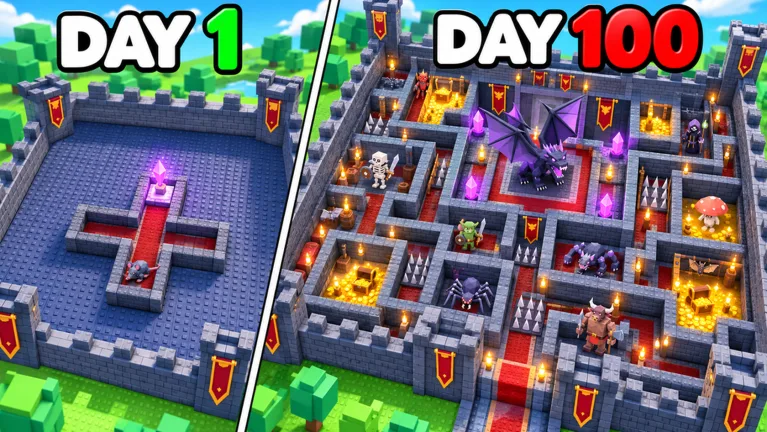
In [GUILDS] Build a Dungeon, the Roblox tycoon from Exploration Guild, you build the dungeon yourself, place monster units and traps inside it, and hold off endless waves of heroes. Heroes enter through a one-way entrance and follow the corridors you lay down toward your dungeon crystal. Coins pay for buildings, traps and dungeon parts, while Dark Souls pay for monster units. Mutations are the special forms a unit can arrive in, and Mutation pity is the pity system the developer announced for those forms.
Update 6 is where Mutation pity was announced, alongside Divine pity, a randomly generated three-floor Labyrinth, Shrine Tiles and advanced auto-roll filtering. The announcement confirms the system exists but does not publish the counter, the threshold or the odds, so the in-game interface is the final word and any percentage you see in a video or a comment is a player estimate rather than a developer figure.
The Four Mutations and What They Change
A mutation raises health, damage, population and Dark Souls cost together, and the multipliers are fixed per variant.
Mutation
Health and Damage
Dark Souls Cost
Extra Population
Golden
2.4× base
4× base
+1
Frozen
3.8× base
7× base
+2
Infernal
5.6× base
12× base
+2
Cursed
8× base
20× base
+3
Two limits matter when you read those numbers. First, mutation stats are listed before room bonuses and other buffs. Second, mutations do not change a unit's attack interval, range or ability percentages, so a mutated unit hits harder rather than faster or further. Boss units additionally get 50% more health and damage inside a Boss Room, and that room bonus sits outside the mutation figures in the table.
How Mutations Arrive: Rolls, Rarity and Milestones
Mutated forms come out of the same unit roll as ordinary units, and a mutated copy costs more Dark Souls to obtain than the base unit. Buildings, traps and dungeon parts are rolled and bought with Coins, while Dark Souls cover the monster units themselves. Recorded gameplay shows the roll counter listing guaranteed tiers rather than percentages:
Milestone on the Roll Counter
Rolls Recorded in Gameplay
Legendary
80 rolls
Mythic
160 rolls
Secret
300 rolls
Divine
2,000 rolls
Those milestones describe the rarity of the unit you are guaranteed, not the mutation it arrives with, and they are community-recorded gameplay evidence rather than a published rate table. The rarity ladder itself runs Common, Uncommon, Rare, Epic, Legendary, Mythic, Secret and Divine. Exploration Guild has not published base probabilities for any tier or any mutation, so the counter on your own roll screen is the only reliable progress readout. Recorded gameplay also shows Luck Potions among roll-screen items, but no published figure explains what they change, so treat them as an unverified shortcut rather than a documented pity rule.
Preparing for a Mutation Hunt
Check the in-game interface first: the roll screen is where the game shows guaranteed tiers and pity progress, and the published Update 6 announcement lists no Mutation pity counter, so read the live interface before committing Dark Souls.
Match the currency to the purchase: Coins buy buildings, traps and dungeon parts, while Dark Souls pay for monster units. A mutation multiplies the unit's Dark Souls cost, so a Cursed unit is the most expensive version of the same monster.
Clear duplicates with auto-roll filtering: Update 6 added advanced auto-roll filtering to manage repeated unit and building rolls, which is what keeps a long mutation hunt from turning into manual inventory sorting.
Fund the session before you start: Coin Booster and Soul Booster Potions multiply what you earn for a while, and both currencies also come from defeating hero waves and from redemption codes.
What Update 6 and Update 7 Changed Around Mutations
Update 6 added Mutation pity and Divine pity together with the three-floor Labyrinth, which is randomly generated, can be run solo or with a group, contains treasure chests, scales its rewards with the difficulty you pick and shares rewards in group runs. The same update added Shrine Tiles that buff surrounding units, advanced auto-roll filtering, and moved the 2x Battle Speed skill-tree upgrade earlier. Update 7 then entered the Guilds beta with mutation changes, trap upgrades and auto rejoin.
Codes are the fastest top-up before a rolling session. 2KCCU! pays 5k Coins and 3k Dark Souls, DRAGONALTAR pays 3 Coin Booster Potions, 1k Coins and 3k Dark Souls, and LABYRINTH pays 3 Soul Booster Potions, 10,000 Coins and 1,000 Souls. Redeem them from the Settings button in the top-left corner of the screen, then press Redeem, and treat the message in game as the final word on what a code still pays. Dexerto's code list tracks the rest of the active codes.
Warning
Do not budget around a mutation percentage. Exploration Guild has not published base odds or a Mutation pity threshold, so any "1 in X" figure quoted in a video, a comment or another wiki is a community estimate. Confirm the current requirement on the in-game interface before you spend Dark Souls chasing a variant.
Mutation Value
A Cursed unit carries 8× base health and damage, but also 20× the Dark Souls cost and +3 population — the strongest variant is also the most expensive one to field.
Pity Discipline
Every unit roll moves the same counter toward the recorded milestones — Legendary at 80, Mythic at 160, Secret at 300, Divine at 2,000 — so a mutation hunt and a rarity hunt are the same spending decision.
Frequently Asked Questions
What is the Mutation pity system in Build a Dungeon?
It is the pity system attached to the mutated forms of monster units — Golden, Frozen, Infernal and Cursed — announced by the developer in Update 6 alongside Divine pity. The announcement does not publish the counter or the trigger threshold, so the in-game interface is the authority.
What do mutations change on a unit?
Health and damage (2.4× Golden, 3.8× Frozen, 5.6× Infernal, 8× Cursed), Dark Souls cost (4×, 7×, 12×, 20×) and extra population (+1, +2, +2, +3). They do not change attack interval, range or ability percentages, and the listed stats exclude room bonuses.
Are there official mutation drop rates?
No. Exploration Guild has not published base probabilities or pity thresholds for units or for mutations, so the roll counter inside your own game is the only reliable progress readout.
Do booster potions improve my mutation chances?
Coin Booster and Soul Booster Potions are described as temporarily improving what you earn, which funds more rolls. No published figure says they change mutation odds, so do not count on them as a pity shortcut.
Where do I get the Dark Souls for mutation rolls?
Defeating hero waves and offline income — the official description confirms that monsters catch heroes offline — plus redemption codes. Coins come from the same sources but pay for buildings, traps and dungeon parts instead of units.