Build a Dungeon Labyrinth Exclusive Units: Update 6 Guide
Learn how the build a dungeon labyrinth exclusive units added in Update 6 are earned in Roblox: three-floor runs, special drops, mutations and what stays unpublished.
Published: Build a Dungeon Wiki Editorial Team
Table of Contents
What the Labyrinth-Exclusive Units Are
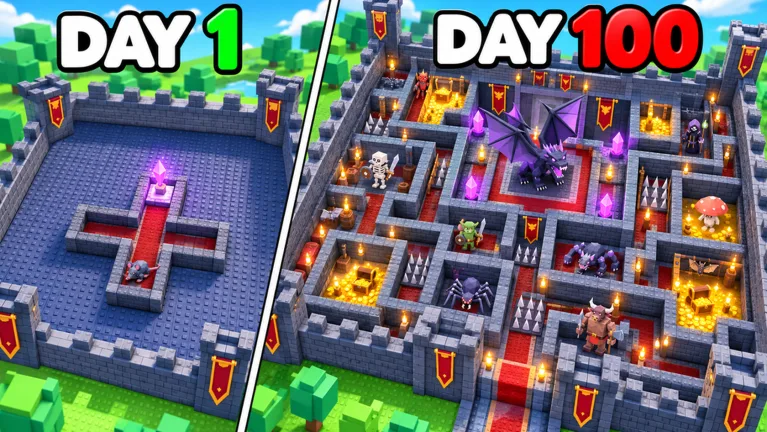
The Labyrinth is the mode Update 6 added on top of the base defense loop. In the main game, heroes enter your dungeon through a one-way entrance, follow the corridors you lay down, and try to destroy your dungeon crystal while your monster units and traps wear them down. The Labyrinth is the other half of that loop: the developer describes a randomly generated maze with three floors per run, monsters to fight and treasure chests to open, playable alone or with friends, with rewards shared in a group and payouts that scale with the difficulty you choose.
The developer's Update 6 announcement confirms four Labyrinth-exclusive units and frames them as an additional collection objective beyond regular unit acquisition. It does not publish which four units carry that label, what their stats are, how often they drop, or whether a pity counter applies to them. Treat any third-party list of names or rates as unverified, and read the in-game Index and the Labyrinth screen for the current answer.
Labyrinth-Exclusive Detail
What Is Confirmed
Where to Confirm It
Number of units
Four, introduced in Update 6
Update 6 announcement
Source
Labyrinth runs and their special drops
Update 6 announcement
Run structure
Three randomly generated floors per run
Update 6 announcement
Party
Solo or with friends, rewards shared
Update 6 announcement
Payout
Scales with the difficulty you select
Update 6 announcement
Names, stats, drop rates
Not published
In-game interface and Index
How to Chase the Four Exclusives
Read the Labyrinth screen first: check the difficulty options and reward text before you commit a run.
Decide solo or co-op: group rewards are shared, so bring friends when the difficulty suits a team.
Clear all three floors: fight the monsters inside the maze and open the treasure chests you find.
Raise the difficulty as your units improve: payouts scale with the difficulty you pick, not with time spent inside.
Bank the special drops: keep the payout and track the four exclusives you still need on the in-game Index.
Each descent is generated fresh, so there is no fixed route to memorise, and the units, mutations and upgrades you already own decide how far a hard run goes.
Units That Carry a Run While You Hunt
Units defend your dungeon: some fight up close, some attack from a distance, and others heal or buff nearby units. The rarity ladder runs Common, Uncommon, Rare, Epic, Legendary, Mythic, Secret and Divine, and the community unit reference lists these examples.
Unit
Rarity
Tags
Damage per Hit (Normal Form)
Bone Ghoul
Common
Physical; Undead
8
Skeleton Warrior
Common
Physical; Undead
9
Grove Healer
Rare
Support; Magic
8
Skeleton King
Legendary
Physical; Undead; Boss Unit
30
Lich Lord
Mythic
Magic; Undead; Boss Unit
54
Banshee Queen
Secret
Magic; Undead; Boss Unit
140
Seraph of Ruin
Divine
Magic; Holy; Boss Unit
300
Those figures come from the community reference and describe Normal-form units, so the in-game Index stays the authority on the units you actually own.
Close-Range Fighters
Common units such as Bone Ghoul and Skeleton Warrior sit at the bottom of the ladder, below the Legendary, Mythic, Secret and Divine pulls that take far more rolls.
Ranged Attackers
Some units attack from a distance, but they need an open lane, because your monster units cannot attack through a wall while hero archers have been recorded shooting through one.
Support Units
Support-tagged units such as Grove Healer heal or buff the units around them instead of carrying the damage themselves.
Mutations That Multiply a Unit
Mutations raise health, damage, population and Dark Souls cost together, and they apply to the units you roll rather than changing how a Labyrinth run is generated.
Mutation
Health and Damage
Dark Souls Cost
Extra Population
Golden
2.4× base
4× base
+1
Frozen
3.8× base
7× base
+2
Infernal
5.6× base
12× base
+2
Cursed
8× base
20× base
+3
Mutations do not change a unit's attack interval, range or ability percentages, the community tables exclude room bonuses and other buffs, and the listed roll chances are taken before luck and event bonuses. Boss units get 50% more health and damage while they stand in a Boss Room, which makes that room the natural home for the Boss Unit pulls above.
Roll Milestones, Pity and Auto-Roll Filtering
Rolling for units is the main way to widen your roster, and recorded gameplay shows these milestones at the top of the ladder.
Rarity
Roll Milestone Reported by Players
Legendary
80 rolls
Mythic
160 rolls
Secret
300 rolls
Divine
2,000 rolls
Those numbers come from player recordings rather than an official rate table. Update 6 added Divine pity and Mutation pity systems plus advanced auto-roll filtering for repeated unit rolls, and the developer has not published the counters, percentages or thresholds they use.
Warning
If a page or a video hands you an exact Labyrinth-exclusive drop rate or pity threshold, it is not working from a published figure. The in-game interface is the only authority on the numbers currently in force.
What the Rest of Your Dungeon Does With Those Units
A Labyrinth payout is only useful once it reaches the dungeon you defend between runs, and the two currencies split cleanly: Coins buy buildings, traps and parts, while Dark Souls are spent on monster units. Coin Booster and Soul Booster Potions temporarily improve what you earn, and defeating hero waves pays both currencies, so the dungeon you defend is also what funds the next roll.
Part or Trap
Documented Behaviour
Potion shop
Heroes stop inside to buy potions, and those purchases are one of the main sources of income in recorded play.
Treasure room
Heroes are guaranteed to head for a treasure room, which turns it into a controllable lure.
Tar pit
Slows heroes down rather than killing them, buying your units more time on target.
Oil
Heroes who step into oil keep burning across the following tiles.
Lava floor
Increases fire damage, which is why recorded builds pair it with fire traps.
Place units with a clear lane, because your monster units cannot attack through a wall.
Mix unit damage into trap corridors, since thief heroes disarm traps within a one-tile radius.
Expect hero healers to keep a wave alive, and expect archers to shoot over your walls.
Watch the escape menu: it shows your hourly Coin and Soul rate based on your highest wave.
Failing a level is not permanent, because recorded gameplay shows a checkpoint at wave 10 that a failed level restarts from.
The official description confirms monsters keep catching heroes offline, so the dungeon earns between sessions.
Codes and Official Sources for Labyrinth Updates
The LABYRINTH code is the reward source tied most directly to this mode, granting 3 Soul Booster Potions, 10,000 Coins and 1,000 Dark Souls.
Code
Reported Reward
LABYRINTH
3 Soul Booster Potions, 10,000 Coins, 1,000 Dark Souls
2KCCU!
5k Coins and 3k Dark Souls
DRAGONALTAR
3 Coin Booster Potions, 1k Coins, 3k Dark Souls
DIVINE
Coin Booster Potion plus Coins and Dark Souls
100KVISITS!
Soul Booster Potion plus Coins and Dark Souls
Tip
Open Settings in the top-left corner of the screen, type the code into the text box and press Redeem. Codes are case-sensitive, so copy them exactly.
Update notes, mutation changes and new codes land in the Exploration Guild community and the official Discord. Update 7 moved the game into its [GUILDS] era, with guilds in beta and notes covering mutation changes, trap upgrades and auto rejoin. The official Roblox game page remains the authority on beta status, six-player servers and the lack of voice chat and camera support.
Frequently Asked Questions
What are the Labyrinth-exclusive units in Build a Dungeon?
They are the four monster units that Update 6 attached to the Labyrinth, the randomly generated three-floor mode filled with monsters and treasure chests. The developer confirms the count but has not published their names, stats, drop rates or pity thresholds, so the in-game Index is the authority.
How do I get a Labyrinth-exclusive unit?
Run the Labyrinth alone or with friends, clear the three floors, open the treasure chests and collect the mode's special drops. Rewards are shared in a group and scale with the difficulty you select, and no official acquisition rate exists.
Are the Labyrinth-exclusive units stronger than Divine units?
There is no published comparison. The rarity ladder runs Common, Uncommon, Rare, Epic, Legendary, Mythic, Secret and Divine, and the community reference lists 300 damage per hit for the Divine Seraph of Ruin, but the four exclusives have no published stats to rank them against.
Do mutations apply to Labyrinth-exclusive units?
Mutations are a system-wide part of unit rolling: Golden units have 2.4× health and damage, Frozen 3.8×, Infernal 5.6× and Cursed 8×, at 4×, 7×, 12× and 20× the Dark Souls cost. Check the in-game Index for the current form of a specific unit, because nothing has been published about the exclusives individually.
What should I spend a Labyrinth payout on?
Coins go into buildings, traps and parts, Dark Souls go into rolling for monster units, and Booster Potions multiply what you earn for a while. The LABYRINTH code adds 3 Soul Booster Potions, 10,000 Coins and 1,000 Dark Souls on top of that.