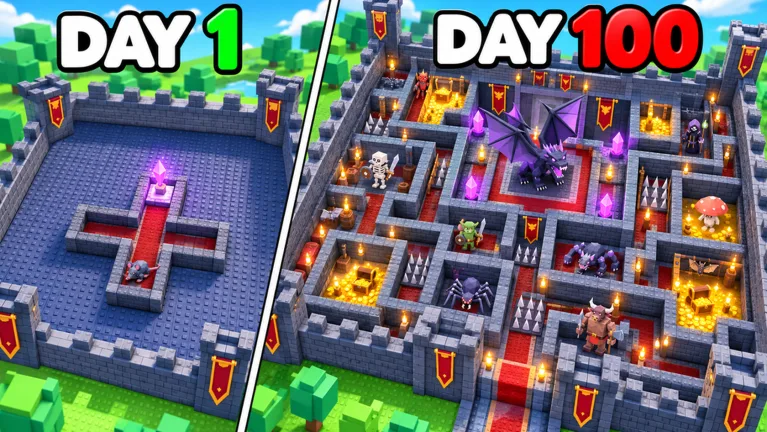
Best Build a Dungeon Building Upgrade Priority Guide
Build a Dungeon building upgrade priority explained: which corridors, potion shops, traps and skill-tree nodes to fund first in the Roblox dungeon builder, and what to confirm in the game interface.
Published: Build a Dungeon Wiki Editorial Team
Table of Contents
What Building Upgrade Priority Means in Build a Dungeon
Build a Dungeon hands you the whole dungeon: the official description tells players to build your own dungeon, defeat endless waves of heroes, put monsters in the dungeon to loot heroes and collect cool buildings and strong monsters for more cash, and it adds that monsters catch heroes offline. Your build a dungeon building upgrade priority therefore shapes your economy, your defence and your traffic flow at once. The game is in beta and updates regularly, and Exploration Guild has not published building upgrade levels, costs or effects, so treat the order below as a framework and the in-game interface as the authority. Announcements appear on the Roblox game page, the Exploration Guild community and the official Discord.
First Priority: A Route That Actually Carries Heroes
Nothing earns anything until heroes have a path to walk. Recorded runs show heroes entering through a one-way entrance and following the corridors the player lays, with stone corridor as the main path while wooden floor reads as a dead end; junction, crossroads, curved corridor, curved wall and dead end are the other parts those runs use.
Traffic control matters just as much, because recorded play shows gold bait turning roughly 50% of heroes into loops. Firing lines count too: an archer archetype can attack through walls, while player units cannot.
Priority Table: Which Pieces to Fund First
Piece or building
What recorded play shows
Upgrade priority
Stone corridor, junction, crossroads, curved corridor, dead end
Heroes follow the corridors you lay; stone corridor is the main path, wooden floor reads as a dead end
Critical — finish a working route first
Potion shop
Heroes go in and buy potions; recorded play calls it one of the biggest income sources
Verify on the in-game interface — no published upgrade data
Warning
Exploration Guild has not published building upgrade levels, prices or effects, and the roll probability table is not published either. Recorded runs read 80 rolls for a Legendary, 160 for a Mythic, 300 for a Secret and 2,000 for a Divine, and unit purchases at 190,000 and 220,000 Dark Souls. Treat those as observations, not confirmed prices.
Where the Money Comes From
Coins come from heroes spending inside the dungeon: the potion shop is one of the biggest income sources in recorded runs because heroes go in and buy potions, and the treasure room works as a magnet because heroes are always drawn toward it. The escape menu reports your hourly rate at your highest wave — recorded play at wave 190 reads about 8,400 Coins and 385 Souls per hour.
Dark Souls are the second pool, and recorded play spends them on monster units rather than on the floor: one purchase cost 190,000 Dark Souls and another was priced at 220,000, while rolls read a Legendary by 80, a Mythic by 160, a Secret by 300 and a Divine by 2,000. Official drop rates are not published, so check the in-game counter before spending.
Tip
Redeemable codes are the cheapest upgrade funding in the game. Open Settings in the top-left corner, enter the code and press Redeem. Recorded codes include GUILDS for Coins and Dark Souls and LABYRINTH for 3 Soul Booster Potions, 10,000 Coins and 1,000 Souls, and trackers disagree on the exact amounts for a few codes, so the message shown after redeeming is the final word.
The Three Layers of a Build
The route layer
Stone corridor, junction, crossroads, curved corridor, curved wall and dead end shape the walk, and gold bait turns roughly 50% of heroes into loops. This layer grows by extending the path.
The income layer
Potion shop and treasure room. Heroes buy potions on their way through and are always drawn toward treasure.
The combat layer
Traps and monster units. A thief dismantles traps within a one-tile radius, a healer keeps heroes alive, and player units cannot attack through walls while archers can.
A Practical Build Order for a New Dungeon
Lay the route: run stone corridor from the one-way entrance through the space heroes must cross, and use junction, crossroads and curved corridor to extend the walk.
Add the potion shop on that route: heroes buy potions as they pass, so put it where every hero walks rather than in a corner.
Place the treasure room to pull heroes deeper: heroes are always drawn toward treasure, so it drags traffic past your defences.
Layer traps along the walk: tar pit only slows and oil sets heroes on fire within 3 tiles, and since a thief dismantles traps within a one-tile radius, do not put the whole trap budget in one cluster.
Then spend Dark Souls on monster units: units cannot attack through walls, so place them where the corridor is open.
Re-read the skill tree after each record: gold rush, soul harvest, unit damage, population, trap mastery, battlecry and battle speed are the recorded nodes.
Skill-Tree Nodes and Mutations
Part of your budget never appears as a building: recorded skill-tree nodes include gold rush, soul harvest, unit damage, population, trap mastery, battlecry and battle speed, and Update 6 unlocked 2x Battle Speed earlier. Exploration Guild has not published what each node changes per level, so open the node in the in-game interface before committing.
Mutations are the other place Dark Souls disappear, because a mutation multiplies a unit's health and damage while multiplying its cost.
Mutation
Health and damage
Dark Souls cost
Extra population
Golden
2.4x
4x
+1
Frozen
3.8x
7x
+2
Infernal
5.6x
12x
+2
Cursed
8x
20x
+3
Mutations do not change attack interval, range or skill percentages, and boss units gain 50% extra health and damage inside the Boss Room, so decide whether the same Dark Souls fund a mutation, a roll or a new unit.
When to Change the Order
Failure restarts you from the nearest checkpoint — one recorded run held a checkpoint at wave 10 and restarted at wave 10 — so a layout experiment only costs progress from that point. Servers hold six players, voice and camera are not supported, and the game is in beta, so an update can rebalance a build that worked yesterday. Because monsters catch heroes offline, part of each session's value is collected while you are away.
Upgrade Priority Checklist
Confirm that stone corridor, not wooden floor, carries heroes through your route.
Check that the potion shop and the treasure room sit where heroes actually walk.
Spread traps instead of stacking them inside one thief's one-tile reach.
Place monster units where the corridor is open, since they cannot attack through walls.
Read each building's current level, cost and effect on the in-game interface before spending.
Compare Coins and Souls per hour on the escape menu after the change.
Frequently Asked Questions
What should I upgrade first when I build a dungeon?
The route. Heroes enter through a one-way entrance and follow the corridors you lay, with stone corridor as the main path and wooden floor reading as a dead end. Then add the potion shop for Coins and the treasure room to pull heroes deeper.
Should I spend Coins or Dark Souls first?
They are separate budgets. Coins are the recorded price of parts and traps, such as the poison trap at 1,000 Coins, while Dark Souls buy and roll monster units, with recorded purchases at 190,000 and 220,000.
Does the skill tree change my build a dungeon building upgrade priority?
Yes. Gold rush, soul harvest, unit damage, population, trap mastery, battlecry and battle speed are recorded nodes that sit alongside your buildings, and their percentages are not published, so read each node in the in-game interface first.
How do I know whether a change was worth it?
Use the escape menu, which reports hourly earnings at your highest wave; recorded play at wave 190 reads about 8,400 Coins and 385 Souls per hour. If a rebuild does not move that number, the budget belongs elsewhere on the route.