Table of Contents

How to Get Monsters in Build a Dungeon

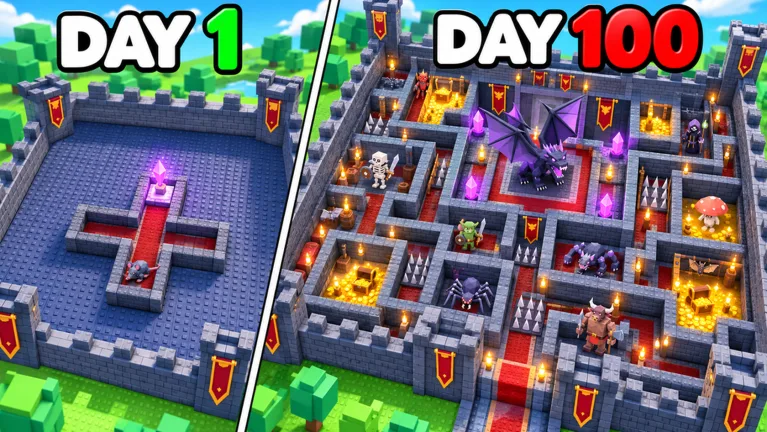
Build a Dungeon is a Roblox simulation and tycoon experience from Exploration Guild in which you build your own dungeon, station monsters inside it, defeat endless waves of heroes, and protect a dungeon crystal. The official description puts it plainly: build your own dungeon, defeat endless waves of heroes, put monsters in the dungeon to loot heroes, and collect cool buildings and strong monsters for more cash.

That framing matters when you search for how to get monsters, because the two halves of the game are bought with two different currencies. Coins buy buildings and defensive traps, while Dark Souls are spent to roll for or buy monster units. If you are hunting for a new unit, you are spending Dark Souls, not Coins, and the unit you receive is placed by hand on a tile you have already built.

This guide covers what recorded gameplay shows about monster acquisition: the roll screen, the community-recorded rarity milestones, the mutation variants that upgrade a unit you already own, and the placement rules that decide whether the unit you pulled actually earns its Dark Souls. Anything Exploration Guild has not published is labelled as such, and the in-game interface is the authority for current numbers.

  1. Finish a workable layout first. You choose the corridors and rooms yourself, so lay a route from the one-way entrance to the crystal before you spend on units.
  2. Earn Dark Souls. Dark Souls are what you spend on monster units; Coins go to buildings and traps, and Coin Booster Potions and Soul Booster Potions temporarily raise what you earn.
  3. Open the roll screen and roll. Recorded gameplay shows the roll button, the roll counter and a stock figure beside each entry in the collection interface.
  4. Watch the counter, not a percentage. Community records place Legendary units around 80 rolls, Mythic around 160, Secret around 300 and Divine around 2,000, and the official drop-rate table has not been published.
  5. Manage duplicates with auto-roll filtering. Monster units are far harder to pull than building parts, so duplicates pile up; Update 6 notes describe advanced auto-roll filtering for managing them.
  6. Place each new unit on the route. Put it on a corridor or room tile the wave has to cross, then re-place anything that never makes contact with a hero.
Rarity tier Community-recorded roll checkpoint Official status
Common, Uncommon, Rare, Epic No published checkpoint; units in these tiers appear in the collection list Official drop rates not published
Legendary 80 rolls Official drop rates not published
Mythic 160 rolls Official drop rates not published
Secret 300 rolls Official drop rates not published
Divine 2,000 rolls Official drop rates not published

The unit list itself is public even though the odds are not. The eight tiers run from Common units such as Bone Ghoul, Goblin Scout, Sewer Rat, Skeleton Warrior and Slime, through Uncommon, Rare, Epic, Legendary, Mythic and Secret, up to three Divine units: Seraph of Ruin, Sun Dragon and Eclipse Archon. Recorded gameplay also shows units being bought outright rather than rolled, with one purchase costing 190,000 Dark Souls and another listed at 220,000, so treat any single price as a reading from one session rather than a fixed shop price.

Legendary Units

Community-recorded milestone at 80 rolls.

Mythic Units

Community-recorded milestone at 160 rolls.

Secret Units

Community-recorded milestone at 300 rolls.

Divine Units

Community-recorded milestone at 2,000 rolls.

Tip

Treat the milestone figures as checkpoints, not guarantees. Exploration Guild has not published drop-rate percentages or a pity table for monster units, so confirm the current values on the in-game roll screen before you decide how many rolls a target unit is worth.

Mutations Upgrade the Monsters You Already Pulled

A mutation is an upgrade applied to a unit you already have, and it is the second route to a stronger roster after the roll itself. Mutations change health and damage, raise the Dark Souls cost of the unit, and add to its population cost, so a mutated unit is stronger but more expensive to field. The four variants recorded in gameplay are Golden, Frozen, Infernal and Cursed.

Mutation Health and damage Dark Souls cost Extra population
Golden 2.4x 4x +1
Frozen 3.8x 7x +2
Infernal 5.6x 12x +2
Cursed 8x 20x +3

Two limits are worth knowing before you plan around a mutated unit. Mutations do not change attack interval, attack range or skill percentages, so a Cursed unit hits eight times as hard but no faster and no further than the same unit without the mutation. And the official drop rates for mutations have not been published either, so read the mutation entry in the game's interface for the current numbers rather than working from a percentage you saw elsewhere.

There is one bonus that does not come from a mutation at all. A boss unit placed in the Boss Room gains 50% more health and damage, which makes the room next to your crystal the natural home for the strongest unit you own.

Warning

Do not assume a mutation is always the right call. Every mutation multiplies the Dark Souls cost and adds population, and population is a placement limit as much as a combat stat. A Golden unit at 2.4x health and damage for 4x the Dark Souls cost and one extra population may cost you a slot you would rather give to a second unit.

Put the Monsters You Got Where Heroes Must Walk

Getting the unit is only half of the job, because recorded gameplay shows heroes entering through a single one-way entrance and following the corridor you lay toward the crystal. Your tiles are the map your monsters work on, and the tiles you choose decide whether a unit ever makes contact with the wave.

The rule that settles most fights is one-directional. Monster units cannot attack through walls, but hero archers can shoot through them. A strong unit parked in a sealed side room contributes nothing to the wave and can still be shot while it stands there, so treat a wall as scenery rather than as protection for your roster.

Placement What recorded gameplay shows Verdict
Open corridor tile on the hero route The unit is on the tiles heroes walk past Best use of a damage dealer
Room floor the wave walks into The unit fights where heroes have to stop and turn Strong for short-range and support units
Tile behind a wall The unit cannot attack through the wall, and hero archers can still hit it Move the unit
Tile beside a trapped stretch The unit covers heroes that survive the traps Worth the slot

The route itself is part of the toolkit. Recorded gameplay shows heroes walking into a dead end, turning around and walking back out, which is extra time your units spend attacking them, and it shows gold bait turning roughly 50% of heroes into a loop instead of letting them take the short path. A potion shop is a lure as well as income, because heroes stop there to buy potions, and a treasure room is guaranteed to pull heroes toward it. Placing lures on the stretch your monsters cover keeps the wave inside their range while it pays you Coins.

Two hero classes counter a monster line, and both are visible in recorded gameplay. A thief disarms traps within a one-tile radius, so a corridor held together by traps alone opens up the moment a thief walks through and your units have to finish the job. A healer restores health to other heroes, so damage from a single unit can be undone; sharing one stretch of corridor between several units and the traps solves both problems at once.

  • [ ] Roll for monster units with Dark Souls and keep Coins for buildings and traps.
  • [ ] Read the roll screen for the current counter and any current milestone, because official drop rates are not published.
  • [ ] Confirm the tile you place a unit on has line of sight along the corridor; units cannot attack through walls while hero archers can.
  • [ ] Decide whether a mutation's health and damage multiplier is worth its Dark Souls cost and extra population before you apply it.
  • [ ] Put your strongest unit in the Boss Room if you want the 50% health and damage bonus.
  • [ ] Re-place any unit that never makes contact with a wave, and test changes between waves because building is disabled while a wave is running.

Frequently Asked Questions

How do I get monsters in Build a Dungeon?

Monster units are obtained with rolls paid in Dark Souls, which recorded gameplay reserves for units while Coins buy buildings and traps. Roll in the game's roll interface, then place the unit on a tile you have built. The official drop-rate table has not been published, so the in-game roll screen is the authority for current numbers.

What are the roll milestones for Legendary, Mythic, Secret and Divine units?

Community gameplay records put Legendary units at 80 rolls, Mythic at 160, Secret at 300 and Divine at 2,000. These are player-recorded checkpoints rather than an official table, and Exploration Guild has not published drop-rate percentages or a pity threshold.

Do mutations change a monster's attack speed or range?

No. Mutations multiply health and damage, raise the Dark Souls cost and add population, but they do not change attack interval, attack range or skill percentages. Golden is 2.4x health and damage for 4x Dark Souls and +1 population, Frozen 3.8x for 7x and +2, Infernal 5.6x for 12x and +2, and Cursed 8x for 20x and +3.

Why does my monster unit deal no damage?

Check what is standing between it and the wave. Recorded gameplay shows monster units cannot attack through walls while hero archers can shoot through them, so a unit in a sealed side room does nothing and can still be hit. Move it onto an open corridor or room tile the wave must cross.

Do monsters keep working while I am offline?

Yes. The official description states that monsters catch heroes offline, so a placed roster keeps earning while you are away. Your highest wave also drives income: the escape menu shows an hourly Coins and Souls figure, and a recorded session at wave 190 showed roughly 8,400 Coins and 385 Souls per hour.

Can I trade monsters with other players?

Exploration Guild has not published a trading system for monster units. The game is listed as being in Beta and updates regularly, so check the current in-game interface before you assume any unit can be moved to another player.

Official Links and the Dark Souls You Roll With

  • Build a Dungeon on Roblox - the official game page from Exploration Guild, and the source of the description quoted above.
  • Exploration Guild community and the official Discord - developer announcements and new code drops.
  • Codes top up the currencies you spend on rolls. Redeem them with the Settings button in the top-left corner of the game and the Redeem button; verified rewards include Coins and Dark Souls (GUILDS), 3 Coin Booster Potions with 1k Coins and 3k Dark Souls (DRAGONALTAR), and 3 Soul Booster Potions with 10,000 Coins and 1,000 Souls (LABYRINTH).
  • The game is in Beta with a six-player server size and no voice or camera support, so unit prices, mutation rates and roll milestones can change with an update; the in-game interface is always the current source.

Related Guides

In this category

How to Build a Dungeon Shrine Tiles in Roblox

Learn how Build a Dungeon Shrine Tiles work in Roblox: what the Update 6 shrine tiles do, why nothing can be placed on top of them, and how to position monster units around them.

Continue reading
Related guide

Build a Dungeon Monster Tier List: Which Units Are Worth Keeping

A practical build a dungeon monster tier list guide for judging which monster units are worth keeping, using the rarity ladder, mutation multipliers, Boss Room bonus and community roll milestones.

Continue reading
Related guide

Build a Dungeon Monster Placement Guide: Where to Put Units

Learn build a dungeon monster placement in Roblox [GUILDS] Build a Dungeon: put monster units on the hero path, cover trap tiles, and use rooms and mutations well.

Continue reading
Explore next

Build a Dungeon on Roblox: Official Info, Units, and Codes

Build a Dungeon on Roblox explained with verified details: the official game page and IDs, Coins and Dark Souls, monster units, mutations, traps, updates, and codes.

Continue reading

References